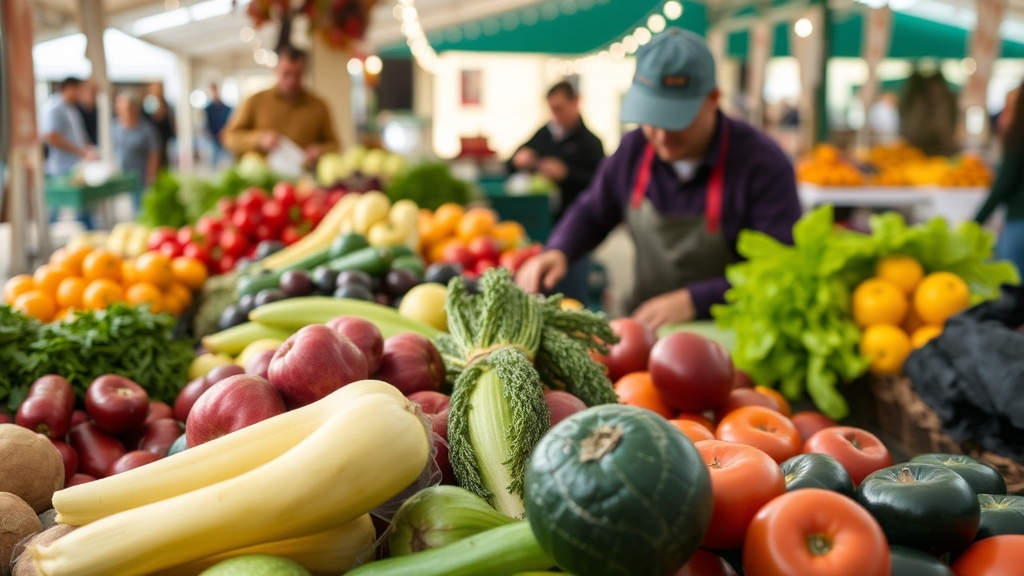
Picking the Best Seasonal Produce at Local EG Farmers Markets

Ever wondered why your supermarket tomatoes taste like water while the ones at the local market actually have flavor? This guide breaks down exactly how to select the highest quality seasonal produce at East Gwillimbury farmers markets, ensuring you don't waste money on subpar vegetables. We'll look at seasonal timing in York Region, how to spot ripeness, and what to ask local farmers to get the best value for your grocery budget.
How do I know when produce is in season in York Region?
The best way to know if produce is in season is to follow the natural growing cycles of Southern Ontario, which typically peak in late spring for greens and late summer for hearty vegetables. In East Gwillimbury, our growing season is dictated by the frost-free dates in May and the first frost in October. If you try to buy strawberries in August, you're likely paying for imported fruit that isn't nearly as sweet as the June crop.
Local farmers rely on the specific climate of the Holland Marsh and surrounding York Region areas to produce high-yield crops. When you see a massive influx of a specific item—like corn or peaches—it's a sign that the peak season has arrived. Buying during these windows ensures you get produce that was likely picked within 24 to 48 hours of hitting the stall.
Here is a general timeline for what you can expect to find at our local markets throughout the year:
- Late Spring (May - June): Asparagus, radishes, leafy greens (spinach, arugula), and early spring onions.
- Summer (July - August): The heavy hitters like sweet corn, tomatoes, cucumbers, zucchini, berries, and stone fruits (peaches, plums).
- Fall (September - October): Apples, pumpkins, squash, potatoes, and hearty root vegetables like carrots and beets.
- Winter: Most local markets shift toward artisanal goods, but you might find preserved items like jams or fermented vegetables.
If you want to verify the official growing seasons and agricultural standards for our province, check out the Ontario Ministry of Agriculture, Food and Rural Affairs website. It's a great resource for understanding the technical side of what's being grown in our backyard.
What should I look for when buying vegetables?
You should look for firm texture, vibrant color, and weight to ensure your vegetables are fresh and nutrient-dense. A heavy tomato usually means it's juicy and full of water, whereas a light one might be pithy or dried out. It's a small detail, but it makes a massive difference in your kitchen.
When you're standing at a stall, don't be afraid to pick things up. If you're buying leafy greens like kale or swiss chard, look for leaves that are crisp and upright—not wilted or slimy. If the edges of the leaves are turning brown or translucent, leave them behind. That's a clear sign they've been sitting out too long or weren't stored properly.
For root vegetables like carrots or beets, look for skin that is tight and smooth. If the surface is deeply wrinkled, it's lost its moisture. You want the ones that feel solid and heavy for their size. This is especially true for the varieties often found in local York Region soil, which tend to be much more flavorful than the mass-produced versions found in big-box stores.
The "Touch Test" for Fruit and Vegetables
Selecting fruit requires a slightly different approach than vegetables. You aren't just looking for freshness; you're looking for the exact moment of peak ripeness. If you buy a melon today and it's hard as a rock, you'll be waiting a week to eat it. If it's too soft, it's already over the hill.
- Melons: Look for a creamy, matte skin rather than a shiny one. A dull skin often indicates a sweeter interior.
- Stone Fruit (Peaches/Plums): Give them a very gentle squeeze. They should have a slight "give" but shouldn't feel mushy or bruised.
- Bersee: Look for deep, consistent color. If a strawberry is white at the top, it's underripe and will be tart.
- Avocados: While not always local, if you see them at a market, feel for a slight softness near the stem.
Note: Always wash your produce thoroughly before consuming, regardless of how "clean" it looks at the market.
How can I get the best value at a farmers market?
The best way to get value is to buy in bulk when items are at their seasonal peak and to ask vendors about their "ugly" produce or end-of-day discounts. While farmers markets can sometimes feel more expensive than a standard grocery store, the quality-to-price ratio is often much higher when you're buying produce that hasn't traveled thousands of miles.
Don't be shy about talking to the person behind the stand. Most of these folks are actually the farmers or have a direct connection to the farm. Ask them, "What's the best thing you have today?" or "Which of these will last longest in my fridge?" They love talking about their crops, and their advice is usually spot on.
Sometimes, you'll see "seconds" or "imperfect" produce. This is produce that might have a weird shape or a small blemish but is perfectly fine to eat. Buying these can save you a lot of money. A crooked carrot tastes exactly like a straight one, after all.
| Feature | Local Farmers Market | Supermarket (Mass Produced) |
|---|---|---|
| Flavor Profile | High; picked at peak ripeness. | Moderate; often picked green to survive shipping. |
| Nutrient Density | Higher; less time in transit. | Variable; can degrade during long-distance transport. |
| Price per Unit | Higher for premium items; lower for seasonal bulk. | Lower for standard items; consistent. |
| Environmental Impact | Low; minimal food miles. | High; long-distance shipping and packaging. |
If you're interested in the nutritional science behind why fresh produce is superior, the Wikipedia page on nutritional value offers a deep dive into how processing and storage affect vitamins. It's a great way to understand why that local peach is better for you than a canned one.
Common Mistakes to Avoid
One of the biggest mistakes people make is buying too much of one thing without a plan. If you buy three heavy heads of cabbage because they looked like a "great deal," you might find yourself throwing them out in two weeks because you couldn't use them fast enough. Only buy what you can realistically cook in the next few days.
Another mistake is failing to check the bottom of the containers. Sometimes, a beautiful-looking crate of berries is hiding a layer of mold at the bottom. Always lift a container or look closely at the base to ensure one bad berry hasn't ruined the whole batch. This is especially common with berries and soft stone fruits.
Lastly, don't forget to bring your own reusable bags and perhaps a sturdy crate. There's nothing worse than getting home and having your heavy squash or heavy melons break through a flimsy plastic bag. If you're planning a big haul, a rigid basket is a lifesaver.
If you want to support the local economy and ensure our agricultural traditions continue, keep an eye out for the "Certified Organic" or "Local" labels. While not every farmer uses the official organic certification (which can be expensive for small farms), many use similar regenerative practices that are just as beneficial for the soil. You can learn more about the standards for organic production via the Government of Canada's official guidelines.
The next time you head out to an East Gwillimbury market, use these tips to shop with intention. Your kitchen—and your taste buds—will thank you.
Steps
- 1
Check for Seasonal Colors
- 2
Inspect Texture and Firmness
- 3
Smell for Natural Aromas
- 4
Ask the Vendor About Harvest Timing